Fareed Zakaria analyzes Iran's wartime economic resilience and Trump's shifting diplomacy with Tehran and Pyongyang
Source: CNN · All CNN reports
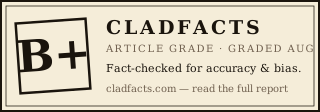
Why this grade: Graded B+: core economic and nuclear claims align with cited WSJ, Reuters and SIPRI reporting; minor gaps in pre-war baselines and exact troop numbers leave some context unaddressed.
Why this lean: Highlights Trump's rhetoric as erratic and contrasts it with failed North Korea engagement; relies on establishment sources without counterbalancing administration perspectives.
Embed this grade
Disagree with this grade or political lean?
Tell us why. Your note is reprocessed through the same grading logic; if the output is still off the report is removed, and if it holds up it stays.
Topics in this report
Summary
The segment examines why Iran's economy has not collapsed under US-Israeli strikes despite $270B in estimated damage and high inflation. It details domestic production, land trade routes, yuan oil sales, and IRGC-bonyad control of over half the economy. The second half compares Trump's Iran approach to his North Korea diplomacy, noting shifts from threats to engagement and Pyongyang's strengthened position via Russia ties and nuclear growth.
Editorial Assessment
The broadcast provides solid sourcing for Iran's sanctions resilience and Hormuz leverage, corroborated by contemporaneous WSJ and Reuters reporting. Nuclear and troop figures track SIPRI and Western estimates closely. Framing emphasizes perverse regime incentives and Trump's inconsistency, which is a consistent Zakaria theme but omits recent diplomatic outcomes or Iranian negotiating leverage. Viewers miss quantitative updates on actual strike damage versus Iranian claims and full context on Gulf states' pre-existing bypass capacity.
Key Moments
Iran earned $43 billion in oil revenue in 2024, mostly in yuan
Aligns with WSJ reporting on yuan-denominated sales and pre-deal revenue levels.
IRGC and bonyads control more than 50% of Iran's economy
Reuters confirms major IRGC role in oil, construction and smuggling; exact 50%+ economy-wide share is an estimate.
Strait of Hormuz handled 20 million barrels per day before the war
Matches EIA and industry data for pre-conflict flows.
North Korea may have 60 nuclear warheads with material for 30 more
Directly tracks June 2026 SIPRI assessment.
North Korea has sent 16,000 troops to fight for Russia in Ukraine
Falls within 12,000-16,000 range reported by Ukrainian and South Korean intelligence.
Notable Concerns
- Reliance on Iranian official damage estimate without independent verification
- North Korea troop figure of 16,000 sits at upper end of reported ranges
Sources Consulted
- Deal Gives Iran Chance to Turbocharge Its Oil Revenue
- Iranian Guards' business empire to win big if US sanctions lifted
- Increasing focus on nuclear weapons amid heightened escalation risks
- Amid regional conflict, the Strait of Hormuz remains critical
- How North Korean forces are bolstering Russia's war against Ukraine