Leger Fernandez links 46% farm bankruptcy rise to Trump tariffs and Iran conflict
Source: Forbes Breaking News · All Forbes Breaking News reports
Why this grade: The 46% increase in Chapter 12 filings is accurately reported from Farm Bureau analysis of court data, but the broadcast and speech provide limited sourcing or counter-context on causation, baseline levels, and multi-year trends.
Why this lean: Democratic congresswoman frames rural distress exclusively as result of Trump policies; no counter-views or Republican sourcing included in the segment.
Embed this grade
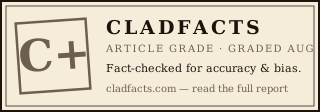
Disagree with this grade or political lean?
Tell us why. Your note is reprocessed through the same grading logic; if the output is still off the report is removed, and if it holds up it stays.
Topics in this report
Summary
The Forbes clip shows Rep. Teresa Leger Fernandez speaking at a DNC rules committee event, advocating for New Mexico as a 2028 presidential primary state. She highlights rural voter outreach, border issues, women's issues, and Democratic achievements in her state. She ties rural hardship to Trump's tariffs, 'war,' and attacks on rural healthcare, specifically citing a 46% jump in farm bankruptcies and rural hospital closures.
Editorial Assessment
The bankruptcy statistic holds up against primary court data analyzed by the American Farm Bureau Federation. However, the segment offers no context on the low absolute numbers (still far below 2019-2020 peaks), the fact that filings began rising before the current term, or alternative drivers such as commodity prices and interest rates. Attribution to tariffs and the Iran conflict reflects partisan framing without competing economic analyses. Viewers miss discussion of farm income forecasts and regional variation in filings.
Key Moments
Farm bankruptcies have skyrocketed 46%
American Farm Bureau Federation analysis of U.S. Courts data: 315 Chapter 12 filings in 2025 vs. 216 in 2024.
Trump's tariffs, war, and Republican attacks devastated rural communities causing the rise
Filings rose amid declining income and higher costs; multiple analyses note continuation of prior trends and low base year.
Notable Concerns
- Direct policy causation asserted without supporting economic studies or counter-data