Ghana MP Emanuel Bedzrah defends criminalizing gay identity and allies
Source: BBC News · All BBC News reports
Why this grade: Graded B+: reporting on the bill's passage, MP's statements, asylum claims, and church positions is accurate and well-sourced to the interview and events; minor issues with slightly outdated framing on signing likelihood and one religious leader's name, but core claims hold up against current records.
Why this lean: Strong emphasis on personal stories of fear and asylum, repeated challenges to MP on cultural/religious arguments, inclusion of Archbishop of Canterbury's pro-LGBTQ+ messaging, and portrayal of religious support as creating a 'green light' for discrimination tilts the framing toward LGBTQ+ rights concerns over Ghanaian cultural and parliamentary consensus.
Embed this grade
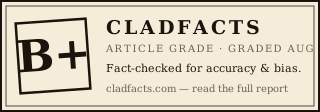
Disagree with this grade or political lean?
Tell us why. Your note is reprocessed through the same grading logic; if the output is still off the report is removed, and if it holds up it stays.
Topics in this report
Summary
The BBC segment follows reporter Emma Jane Kirby in Ghana interviewing MP Emanuel Kwasi Bedzrah, a vocal supporter of the Human Sexual Rights and Family Values Bill. Bedzrah defends criminalizing open expression of same-sex attraction, kissing, and allies who promote or fund it, arguing it violates Ghanaian and African cultural norms; he compares it to laws against stealing and rejects the notion that people are born gay. The report includes a gay Ghanaian man granted asylum in the UK who describes constant fear, inability to visit family, and the bill's impact. It covers parliament's passage of the bill, involvement of religious leaders (including a confusing stance from Anglican Archbishop Cyril Kobina Ben-Smith), and a meeting with the Archbishop of Canterbury during her pastoral visit. The piece notes the bill awaits presidential assent, with some religious figures pushing for harsher measures like denying legal representation or jailing journalists.
Editorial Assessment
The broadcast is largely accurate on the bill's content, parliament's May 2026 passage, and penalties (up to three years for identifying as LGBT or same-sex acts, 3-5 years for promotion or support). Claims about the MP's views, the asylum seeker's experiences, and the archbishop's pastoral emphasis on all being 'made in the image of God' are directly from interviews. Viewers miss broader context: the bill has cross-party and strong public/religious support in Ghana, where colonial-era laws already criminalized same-sex acts; international criticism from HRW and others focuses on free expression, 'duty to report,' and risks of vigilante violence, but domestic polls have shown majority backing for protecting 'family values.' The comparison of homosexuality to theft is presented as absurd without noting that many African societies view sexual norms as communal boundaries. Framing leans toward highlighting harm to LGBTQ+ individuals and Western appeals for equality, which some in Ghana see as cultural imperialism. The report could better clarify the bill's current status (passed but not yet law) and that President Mahama has indicated support.
Key Moments
The bill criminalizes people who are gay or express it openly, and allies who support, promote, or fund it, leading to prison terms
Matches the bill passed in May 2026: up to 3 years for identifying as LGBT or same-sex acts; 3-5 years for promotion, sponsorship, or intentional support; allies explicitly included.
If someone is gay they were born that way
MP Bedzrah explicitly rejected this in the interview, calling it unacceptable and against cultural norms; scientific consensus on biological and environmental factors is complex but not directly addressed.
Ghana is about to become another country where being gay is illegal, joining many Muslim and Christian nations
Parliament passed the bill in May 2026 but it requires presidential assent (Mahama has signaled support); Ghana already criminalizes same-sex acts under existing law, and ~66 countries worldwide still do as of 2026.
The Anglican Archbishop of West Africa says the church does not support criminalization of gay persons but holds traditional views and notes cultural opposition
Cyril Kobina Ben-Smith's interview in the segment and prior statements align with this nuanced position; Anglican primates have opposed criminalization while upholding traditional teachings.
Gay Ghanaians are claiming asylum in the UK due to fear of violence, with the bill giving a 'green light' for discrimination
The featured asylum seeker and human rights reports document increased fear, stigma, and some violence; HRW has warned the bill risks lives via surveillance and reporting duties.
Notable Concerns
- Slightly outdated or conditional presentation of president's signing intentions given his post-2025 signals of support
- Name variation for MP (reported as Emanuel Bedra; official is Emmanuel Kwasi Bedzrah) and one archbishop reference
- Heavy focus on emotional impact and challenges to anti-bill views without equal time for majority Ghanaian perspective