AOC criticizes NDAA passage and Trump Iran war spending in House vote aftermath
Embed this grade
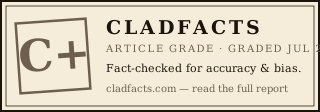
Why this grade: Graded C+: war and NDAA details align with events but trillion-dollar health care cut claim lacks corroboration; spending increases and partisan divide verified
Why this lean: Frames Republican actions as reckless war spending while prioritizing domestic needs; quotes AOC exclusively without counterpoints from administration or supporters
Disagree with this grade or political lean?
Tell us why. Your note is reprocessed through the same grading logic; if the output is still off the report is removed, and if it holds up it stays.
Topics in this report
Summary
The Forbes clip features Rep. Alexandria Ocasio-Cortez criticizing U.S. involvement in the Iran war and recent defense legislation. She argues trillions spent abroad contrast with domestic affordability issues like inhalers and calls for reduced Pentagon outlays in favor of health care. AOC addresses Republican claims of victory on the NDAA and reconciliation blueprint, alleging a trillion-dollar health care cut paired with Pentagon boosts. She disputes national security justifications, notes high per-capita defense spending without audits, and highlights waste affecting veterans' care.
Editorial Assessment
The segment accurately reflects the July 2026 House NDAA passage and ongoing Iran conflict that began February 28 with U.S.-Israeli strikes. Context missing includes administration claims of self-defense against nuclear and missile threats plus Strait of Hormuz disruptions affecting global energy. The specific trillion-dollar health cut remains unsubstantiated in reporting on the reconciliation framework, which targets war funding and other priorities. Framing emphasizes domestic trade-offs without noting bipartisan elements or service member pay raises in the bill. Viewer misses primary documents on spending totals and war authorization debates.
Key Moments
US entering wars without justification and spending trillions abroad while domestic needs unmet
2026 Iran war began Feb 28 with U.S.-Israeli strikes; critics cite lack of congressional approval while administration references self-defense
Republicans win with NDAA and reconciliation blueprint
House passed $1.15 trillion NDAA 216-212 on July 22 along near party lines; reconciliation includes Iran war funding
Republicans cut a trillion dollars in health care and boosted Pentagon budget
NDAA authorizes ~$1.15T defense; reconciliation targets $70B+ for Iran war but no confirmed $1T health cut identified
US spends most per capita on defense, rises yearly without audit
FY2026 defense spending exceeds $900B and rising; Pentagon audits incomplete per longstanding reports
Notable Concerns
- Unverified trillion-dollar health care cut claim