Trump invokes Section 338 to impose 50% tariffs on select Canadian imports
Embed this grade
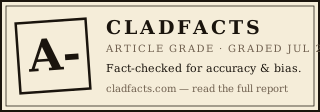
Why this grade: Graded A-: all core legal and factual claims verified against primary sources and recent White House actions; minor omission of the exact July 20, 2026 proclamation timing.
Why this lean: Neutral public broadcaster presentation relying on statutory text and court record with no partisan framing or selective sourcing.
Disagree with this grade or political lean?
Tell us why. Your note is reprocessed through the same grading logic; if the output is still off the report is removed, and if it holds up it stays.
Topics in this report
Summary
The segment explains the legality of new Trump tariff threats on Canada. It covers the February 2026 Supreme Court decision striking down national-emergency tariffs under IEEPA and contrasts that with other available authorities. The report focuses on Section 338 of the 1930 Tariff Act as the basis for up to 50% duties when a country discriminates against U.S. commerce. It details Canadian retaliatory steps on U.S. alcohol, dairy protections and auto-sector measures that the administration cites as discriminatory. The piece notes these tariffs are untested in court and could face challenges if implemented.
Editorial Assessment
The broadcast accurately distinguishes the invalidated IEEPA tariffs from Section 338 authority and correctly identifies Canada's documented retaliatory measures. It supplies statutory context and notes the novelty of the provision without overstating outcomes. Viewers may miss that the administration issued the first Section 338 proclamations on July 20, 2026, targeting autos, alcohol and dairy with 30-day delayed effect. No counter-claims from Canadian officials are presented, but the segment avoids loaded language and sticks to verifiable elements of the dispute.
Key Moments
Supreme Court struck down some Trump tariffs in February on national emergency grounds
Confirmed in Learning Resources, Inc. v. Trump; IEEPA tariffs on Canada/Mexico and reciprocal tariffs invalidated.
Section 338 of the 1930 Tariff Act allows up to 50% tariffs for discrimination against U.S. commerce
Statutory text and July 2026 White House proclamations explicitly invoke this authority.
Canada retaliated with alcohol sales bans, auto changes and dairy protections
Provincial liquor boards removed U.S. products; USMCA dairy TRQs and auto export caps cited by USTR.
Sources Consulted
- Imposing Additional Duties to Offset Canadian Discrimination Against the Commerce of the United States with Respect to Motor Vehicles
- Fact Sheet: President Donald J. Trump Imposes Additional Tariffs on Canada
- Ambassador Greer Issues Statement on President Trump Imposing Section 338 Tariffs on Canada
- Trump imposes 50% tariffs on Canadian alcohol, dairy and automobiles