Illinois Farm Bureau president raises alarms over proposed data centers' water and land demands
Embed this grade
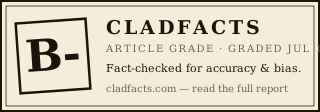
Why this grade: Graded B-: core local claims on Illinois data center proposals, Joliet pipeline, and water concerns verified by local reporting; several national statistics (U.S. data center count, protest scale, bankruptcy surge) overstated or unsupported
Why this lean: Positive framing of Trump administration fertilizer efforts and conservative-led protest; emphasis on farmer/property rights concerns without counterbalancing industry or economic growth perspectives
Disagree with this grade or political lean?
Tell us why. Your note is reprocessed through the same grading logic; if the output is still off the report is removed, and if it holds up it stays.
Topics in this report
Summary
The segment discusses a planned July 18 nationwide protest against hyperscale data centers organized by Humans First, led by Amy Kremer. It focuses on opposition from Illinois farmers, featuring Illinois Farm Bureau President Philip Nelson on proposed facilities' impacts to land, electricity, and water, including a pipeline from the Great Lakes to Joliet. Nelson addresses siting concerns, overbuilding risks, and compares regulatory burdens to farming. The broadcast then shifts to rising farm input costs, diesel prices, and Trump administration actions on fertilizer via Agriculture Secretary Brooke Rollins.
Editorial Assessment
The report accurately captures real local tensions in Illinois around data center water use and siting, corroborated by multiple regional outlets. However, it inflates protest participation figures and cites questionable national data center totals and utilization rates that conflict with industry tracking. Farm bankruptcy and input cost claims lack specific sourcing or context on trends. Viewers miss broader economic arguments for data centers, such as job creation and tax revenue, and details on actual utilization or decommissioning requirements. Sourcing relies heavily on one advocate guest and administration statements.
Key Moments
Humans First organizing nationwide protest in 100+ cities across 40 states on July 18
Protest confirmed for July 18, 2026, but reports indicate ~50 cities in 22 states
Approximately 50 data centers proposed in Illinois, with Joliet site building Great Lakes pipeline for water
29 planned projects reported; Joliet pipeline and aquifer concerns documented in local coverage
Roughly 8,500 data centers in the U.S. operating at about 25% capacity
Industry sources report ~4,500 active U.S. facilities with high occupancy rates
46% surge in farm bankruptcies last year
No corroborating data found for such a sharp increase
Trump administration efforts under Ag Secretary Brooke Rollins lowering fertilizer prices amid Iran-related strains
Rollins has publicly discussed domestic production push and price relief measures
Notable Concerns
- Overstated scale of nationwide protests and U.S. data center inventory/utilization
- Unsupported claim of 46% farm bankruptcy surge
Sources Consulted
- Meet the MAGA Darling Mobilizing Americans Against Big AI
- AI Data Center National Day of Protest
- Chicagoland data center boom raises new questions about water use
- Data Centers in Illinois — Project List & Locations
- U.S. Data Center Power Consumption Map by State (2026)
- Brooke Rollins on combating high fertilizer costs