NewsNation explores Gen Z workplace habits, burnout and mental health shifts
Embed this grade
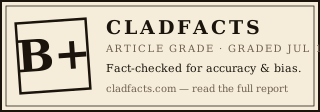
Why this grade: B+: Claims on Gen Z mental health statistics, first-time homebuyer age, and workweek history are well-supported by cited sources and primary data; discussion includes expert input and generational context but relies partly on anecdotal social media examples without deeper counter-data.
Why this lean: No discernible political slant; focuses on generational workplace dynamics and expert analysis without partisan framing or selective sourcing.
Disagree with this grade or political lean?
Tell us why. Your note is reprocessed through the same grading logic; if the output is still off the report is removed, and if it holds up it stays.
Topics in this report
Summary
The segment discusses a New York Post article on Gen Z workers using creative breaks like napping in movie theaters or crying in public spots during the workday. It covers the history of the 40-hour workweek, post-pandemic boundary erosion, TikTok trends, and mental health data. The second half features an interview with workplace well-being expert Jennifer Moss, author of the Burnout Prevention Workbook, who addresses toxic productivity, AI impacts, and employer adaptations. Throughlines include generational differences in resilience and the need for better onboarding and rest policies.
Editorial Assessment
The broadcast accurately presents verified trends such as elevated Gen Z depression rates from Walton Family Foundation research and rising first-time homebuyer ages per NAR data, while noting post-COVID meeting increases and boundary blurring. It balances views by including calls for resilience from older generations alongside Moss's emphasis on systemic workplace issues. Viewers may miss longitudinal studies on productivity impacts or specific employer counterexamples; the framing treats social media anecdotes as illustrative rather than representative. Overall, it provides useful context on transparency demands and mental health openness without overstating causation.
Key Moments
Gen Z born 1997-2012 shows 42% struggling with depression, nearly double the rate for those over 25
Directly matches 2022 Walton Family Foundation/Murmuration research findings.
Median age of first-time homebuyers has risen to 40
Confirmed by 2025 National Association of REALTORS Profile of Home Buyers and Sellers report.
Henry Ford implemented the 5-day 40-hour workweek in 1926
Historical fact corroborated by Ford Motor Company records and labor history sources.
Net productivity increased 90% since the 1980s while expectations on workers have risen
Broad productivity gains are documented by BLS data, but attribution to specific generational pressures lacks direct sourcing in segment.
Sources Consulted
- Generation Z is Waging a Battle Against Depression, Addiction and Hopelessness
- First-Time Home Buyer Share Falls to Historic Low of 21%, Median Age Rises to 40
- The Burnout Prevention Workbook | Jennifer Moss
- Walton Family Foundation and Gallup Gen Z Panel
- The Burnout Epidemic: The Rise of Chronic Stress and How We Can Fix It