Burchett Hearing Examines SNAP Data Sharing and Fraud Detection
Embed this grade
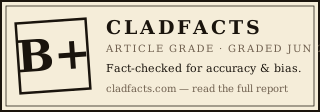
Why this grade: Graded B+: core claims on 29 compliant states, $3B potential fraud, 186k deceased and 442k fake SSNs directly corroborated by USDA preliminary findings; minor deductions for limited context on error vs. fraud distinctions and ongoing privacy litigation.
Why this lean: Emphasizes fraud findings and non-compliance by 21 (mostly Democratic) states while downplaying privacy objections and legal challenges; sourced primarily to administration and Republican-led hearing.
Disagree with this grade or political lean?
Tell us why. Your note is reprocessed through the same grading logic; if the output is still off the report is removed, and if it holds up it stays.
Topics in this report
Summary
The segment covers a House Oversight Subcommittee hearing chaired by Rep. Tim Burchett on combating waste, fraud, and abuse in SNAP. Burchett questions witnesses on inter-state data sharing to detect duplicates, deceased recipients, and invalid SSNs, citing USDA analysis of data from 29 states. Witnesses include privacy experts noting legal limits under the Privacy Act, investigators highlighting duplicate benefits, and the USDA OIG detailing specific state findings. Witnesses discuss how siloed state databases hinder detection; OIG references Ohio anomalies and Puerto Rico deceased payments. The hearing underscores tensions between program integrity and state privacy concerns.
Editorial Assessment
The broadcast accurately relays verified USDA and OIG data from compliant states showing substantial discrepancies. Viewers may miss that the $3B figure represents estimated annual exposure from preliminary analysis of partial data, with distinctions between administrative errors and intentional fraud not fully addressed. Ongoing federal lawsuits by 21 states and D.C. over expansive data requests, including HIPAA elements and five-year histories, provide important counter-context on privacy safeguards. Broader SNAP improper payment rates (~11-12%) predate this effort. Sourcing favors hearing participants aligned with the administration's push for compliance.
Key Moments
21 states refused SNAP data to USDA for past year; 29 states' data showed $3B potential fraud including 186k deceased and 442k fake SSNs
Matches USDA preliminary report from May 2026 on data from 29 agencies and contemporaneous hearing statements.
More data from non-compliant states would identify significantly more fraud via cross-state matching
Supported by investigator testimony on duplicate SSNs across states and OIG examples from compliant data.
OIG found $13.3M anomalies in Ohio; Puerto Rico identified $150M to deceased
Directly matches USDA OIG reports released in 2026.
Privacy Act and quality controls limit expansive 5-year PII requests including HIPAA data
Expert testimony accurate but omits details of pending lawsuits and court injunctions on data demands.
Notable Concerns
- Limited discussion of privacy litigation outcomes and error-vs-fraud distinctions in USDA estimates
Sources Consulted
- USDA SNAP Program Integrity Data Team: Preliminary Findings
- Burchett Opens Hearing on Combating Fraud in SNAP
- USDA OIG Identifies $13.3 Million in Potential SNAP Fraud in Ohio
- Puerto Rico Uncovers More Than $150 Million in USDA Food Assistance Paid to Deceased People
- USDA Escalates SNAP Data Demands: A Threat to Privacy
- Trump administration says it will withhold SNAP from states
- Burchett Investigates States' Refusal to Provide SNAP Data