Schiff Criticizes Trump's Iran War Deal and Costs
Embed this grade
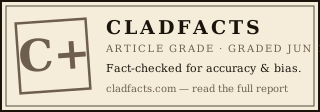
Why this grade: C+: Core timeline and deal framework verified by multiple outlets; specific cost figures ($60B gas, $300B fund, $24B relief) and interpretations rest on partisan estimates or disputed reports with limited independent confirmation.
Why this lean: Strong Democratic opposition framing: emphasizes administration failures, 'war of choice,' and costs to Americans while downplaying any security rationales or Iranian concessions; sole voice is Schiff.
Disagree with this grade or political lean?
Tell us why. Your note is reprocessed through the same grading logic; if the output is still off the report is removed, and if it holds up it stays.
Topics in this report
Summary
The segment features Sen. Adam Schiff delivering a Senate floor speech criticizing President Trump's handling of the ongoing US-Iran conflict and a tentative agreement to reopen the Strait of Hormuz. Schiff argues the war lacks congressional authorization, rests on shifting justifications, and imposes heavy economic burdens on Americans while potentially benefiting Iran through future deals. He calls for invoking the War Powers Act to end hostilities. The speech references a preliminary deal allowing later nuclear talks within 60 days, higher gas and consumer prices, service member losses, and parallel US actions in Venezuela and near Cuba. Sourcing is limited to Schiff's statements with no opposing guests or data graphics shown.
Editorial Assessment
The speech accurately captures the reported framework of a preliminary US-Iran memorandum focused on reopening the Strait of Hormuz with nuclear issues deferred, consistent with contemporaneous reporting. However, load-bearing claims on exact financial transfers ($24B sanctions relief, $300B reconstruction fund) draw from Iranian sources or leaks and face administration pushback as overstated or conditional. Gas price impacts are real but the $60B aggregate lacks precise public verification beyond Democratic estimates. The presentation omits context on Iranian actions closing the strait or prior threats, and frames all rationales as implausible without addressing intelligence assessments cited elsewhere. Viewers miss balanced sourcing on deal terms and congressional dynamics.
Key Moments
Tentative deal reopens Strait of Hormuz with nuclear talks in 60 days or bombing resumes
Matches reporting from Reuters, WSJ, and others on framework agreement signed or imminent in mid-June 2026.
Americans paid $60 billion more for gas during the war
Oil prices rose sharply; specific $60B figure echoed by other Democrats but no primary government tally confirms exact total.
Iran may receive $24 billion in sanctions relief and $300 billion reconstruction fund
Iranian reports and leaks cite figures; Trump called $300B fund 'fake news' while some US officials discussed conditional investment packages.
War began without attack or imminent threat on US; rationales shifted repeatedly
Reflects Schiff's view; official justifications included nuclear and regional threats per administration statements.
Notable Concerns
- Unverified aggregate cost figures presented as fact
- One-sided sourcing and framing of deal benefits
Sources Consulted
- Sen. Schiff on Trump Administration's New Letter Claiming ...
- NEWS: At 60-Day Mark of Iran War, Senate Republicans ...
- Deal is reached to end Iran war and Trump orders stop ...
- Trump and Iran Sign Tentative Peace Deal to End War ...
- US, Iran reach deal to extend ceasefire, open strait
- Trump, Iran agree to memorandum of understanding ...
- U.S. and Iran Have Reached a Deal to Stop Fighting ...
- 'Both parties' at fault in weakening Congress's war powers
- House passes resolution to end hostilities with Iran
- Here's what Iran gains — and loses — in US agreement
- Congress has backed Iran war powers resolutions. Now ...